The rebranded developer site sold the vision of Intelligent Agreement Management beautifully — but left developers asking how to actually build with it. I closed that gap.
In coordination with Docusign's rebrand as the Intelligent Agreement Management (IAM) platform, an outside agency redesigned the developer website. The new page did a good job conveying the benefits of IAM — but developers landed on it and couldn't find the how: how to implement, how to integrate, where to start.
the solution: design for the actual audiences
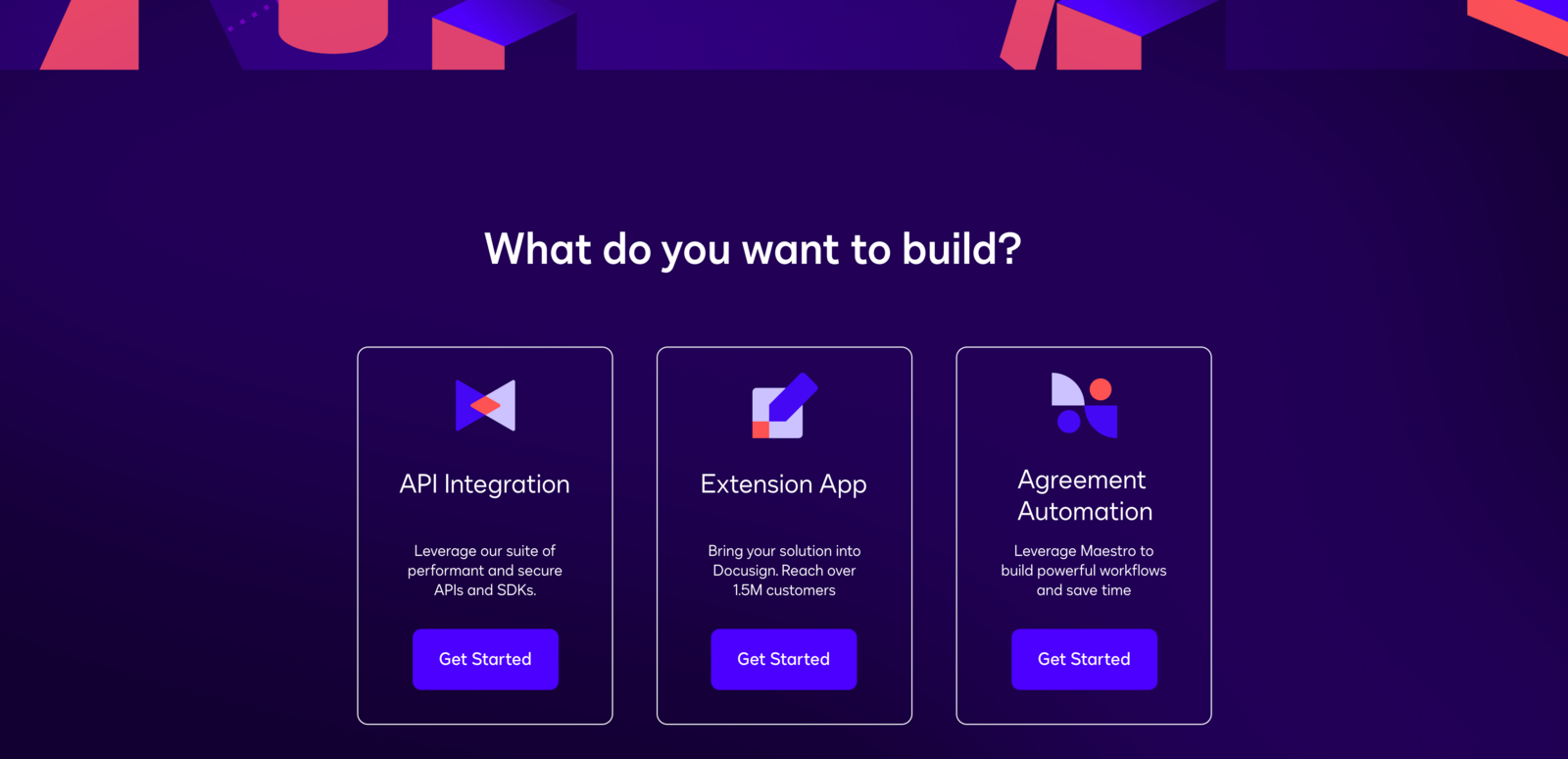
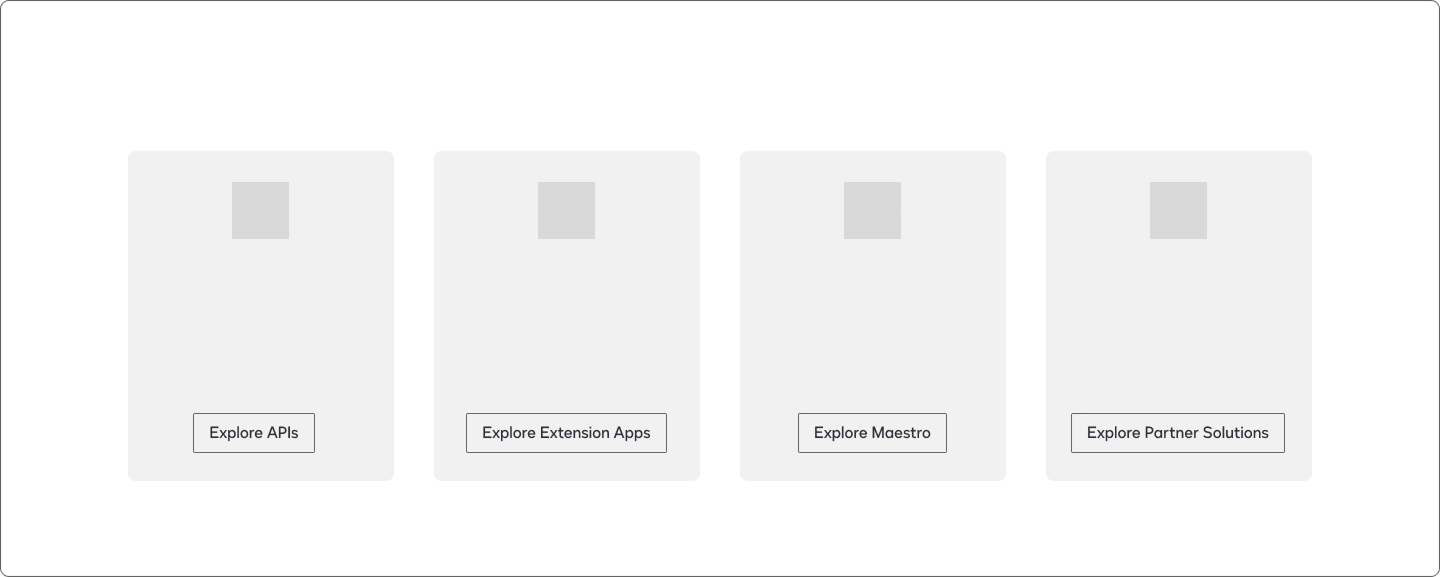
Developer sites don't have one audience. Connecting the dots across who actually visits, I designed a system of entry points on the homepage — organized by what a developer wants to build, each aimed at a distinct audience:
Explore APIs — corporate developers integrating IAM into internal systems
Extension Apps & Partner Solutions — ISVs and partners building on the platform
Maestro — technical no-code builders composing workflows without writing code
the new homepage section — one entry point per build path
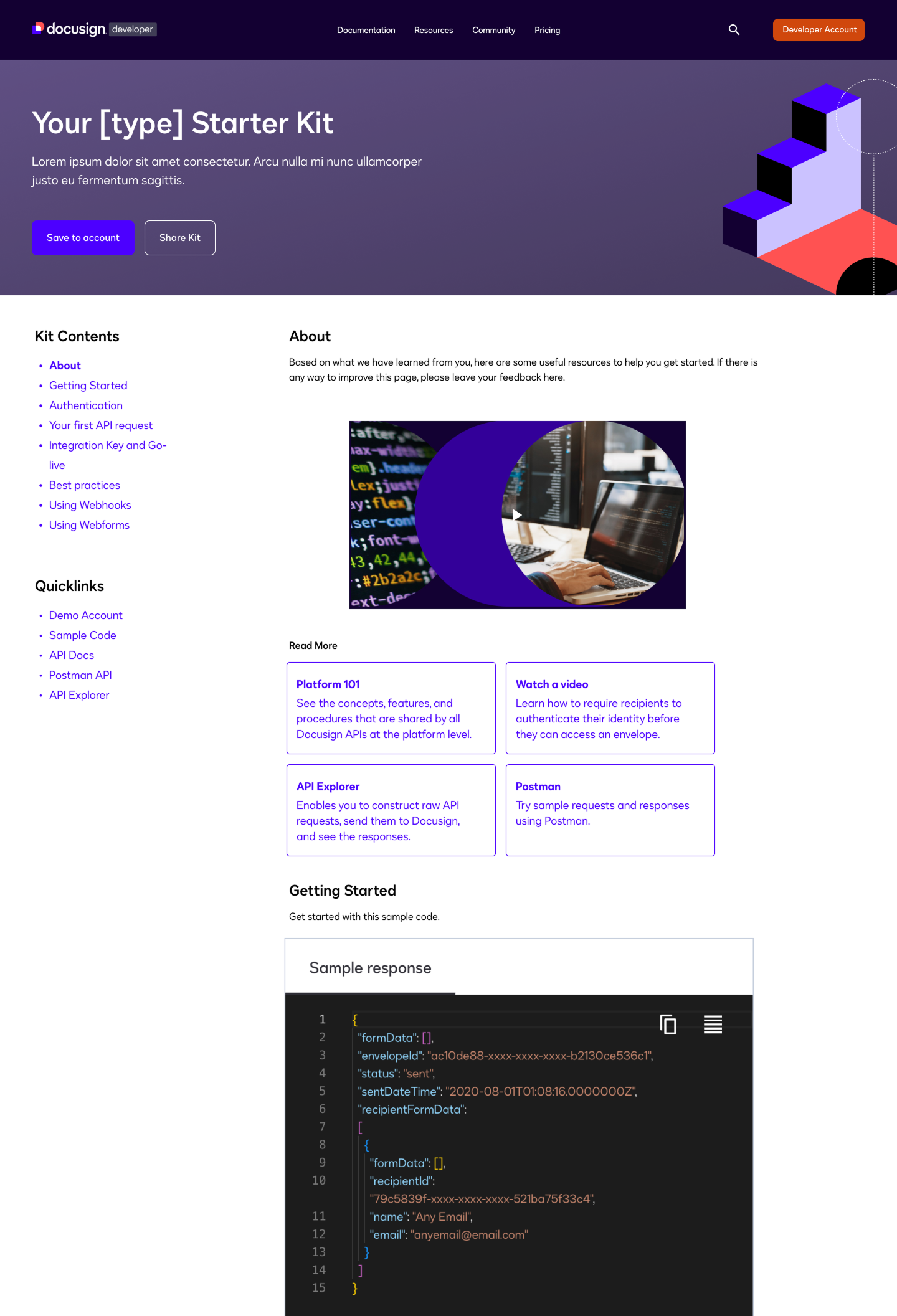
Each path leads to a getting-started guide that's generated, not static. A developer answers a few questions and receives a starter kit tailored to their language and the features they plan to use — kit contents, authentication, a first API request, sample code, and quicklinks — so the very next step is always concrete.
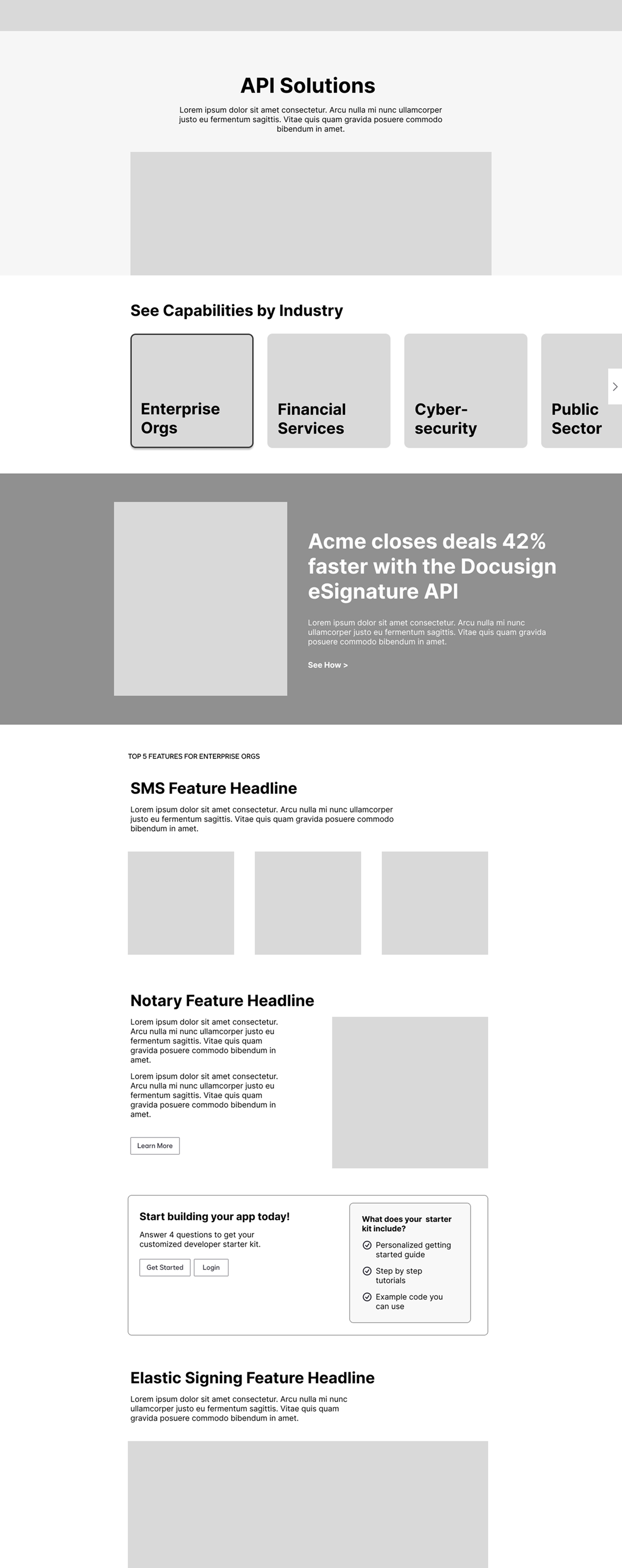
wireframe — capabilities by industry, proof points, and the four-question starter-kit generatorthe result — a personalized starter kit built from the developer's answers
a system, not one-off pages
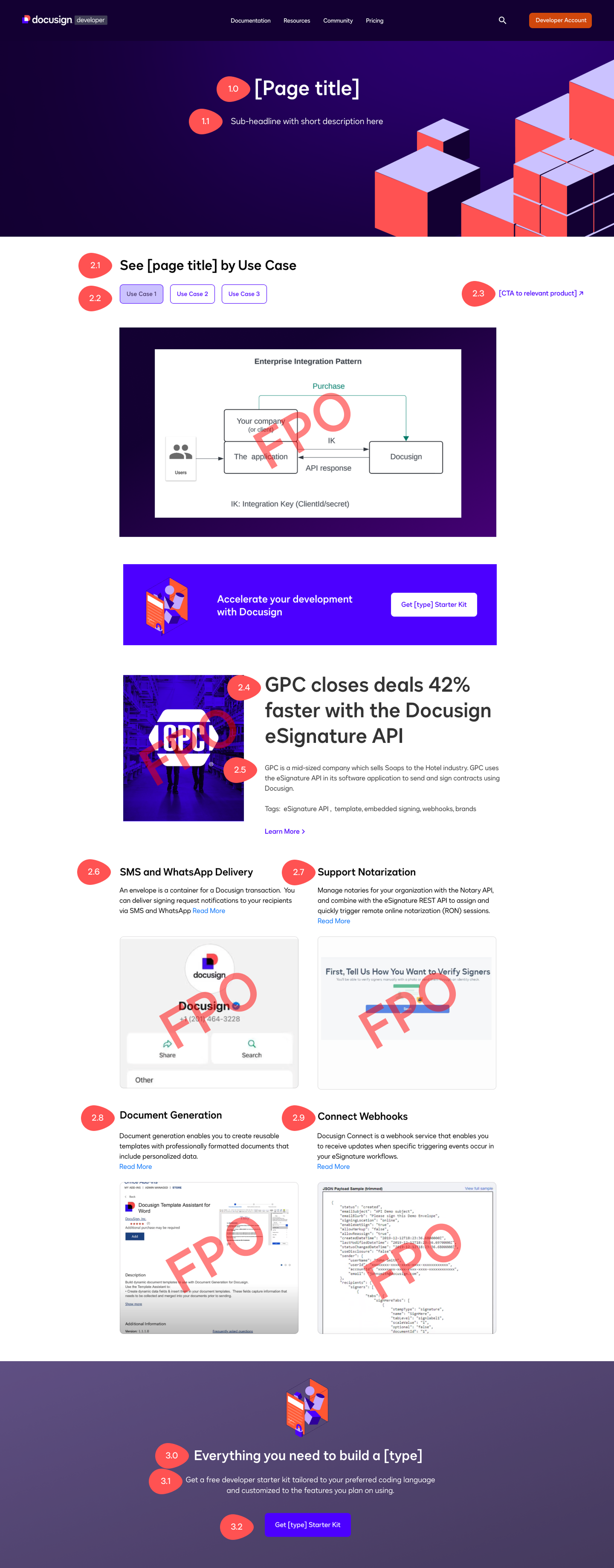
Rather than hand-build every page, I defined a reusable template — annotated specs governing structure, capabilities-by-industry modules, case-study proof points, and the starter-kit call to action. The pattern scales to new products and audiences without a redesign, and accessibility, localization, and marketing all work from the same source of truth.
the annotated page template behind every path — structure, modules, and CTAs
the result
As soon as we launched, the section became the primary next step users take when they land on the developer homepage — turning a brand showcase into a working front door for builders.