How my team reinvented the way CarMax presents used cars online — from a Jobs-to-be-Done research practice that reshaped the car detail page, to the custom AI studio software that produces the imagery at scale across 150+ stores.
ROLEPrincipal Product Designer
TEAMDigital Merchandising
YEARS2015 – 2019
FOCUSResearch · JTBD · AI / computer vision
↑ leadsfeatures shown as photos beat a text list, A/B tested
360°interior photography, shipped to every store
150+ storesrunning custom AI capture software
For years I sat on CarMax's Digital Merchandising team, responsible for how used cars are presented on carmax.com. For a shopper who can't touch the car, the photography is the product — so the whole job of the team was to make those images tell the truth about a car convincingly enough that someone would buy it sight-unseen.
hitting a wall
We were doing everything the age of disruption told us to: talk to customers constantly, experiment our way forward, move fast. And yet the metrics wouldn't budge. In session after session a participant would click through a car's photos, pause, and manage a polite "this is... a nice photo." We had run out of cosmetic ways to make photos better — angle, lighting, indoor versus outdoor — and none of it moved the business.
a new question: jobs to be done
The shift came from Jobs to be Done. Instead of asking how to make photos prettier, I started asking what job a shopper hires a photo to do. We stopped interviewing anyone with vague plans to buy and instead talked to people who'd just purchased, so they could show us the real reasoning behind their choices. The insights came fast.
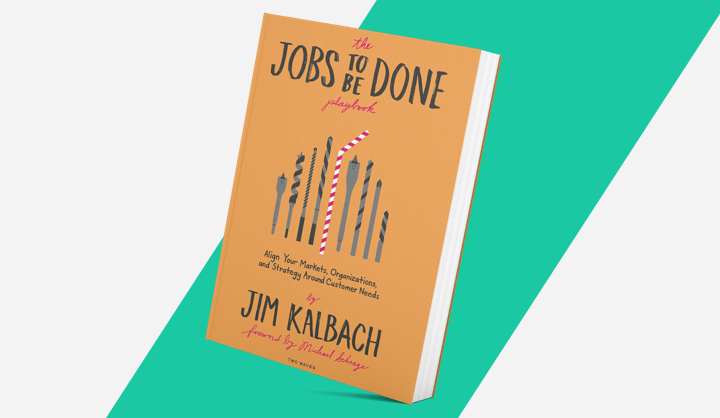
the framework — I later contributed this CarMax case study to Jim Kalbach's JTBD Playbook (Rosenfeld, 2020)
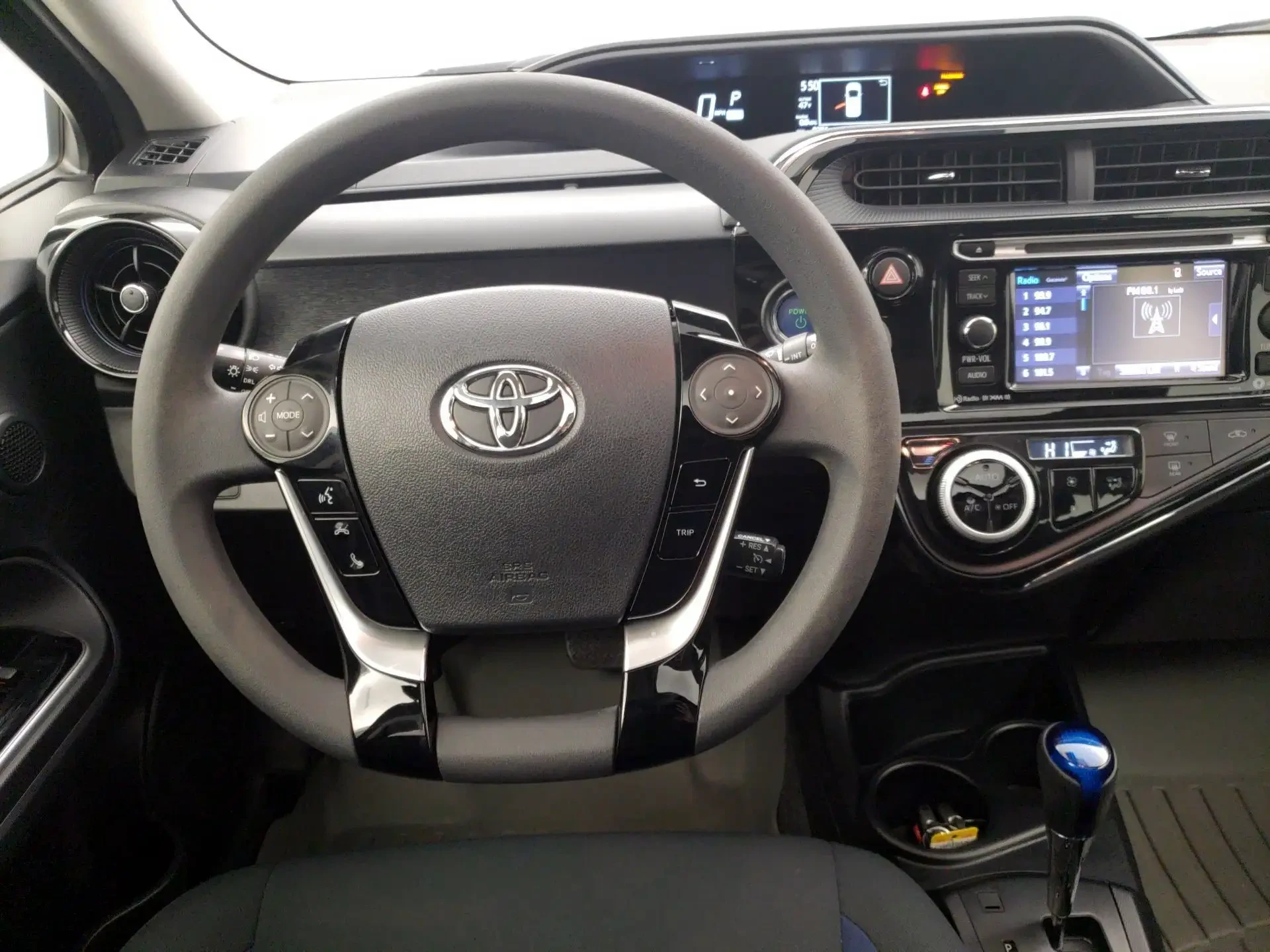
The clearest example: shoppers kept slowing down on one photo — a close-up of the steering wheel — leaning in, zooming, studying it. Why? They were checking for a Bluetooth button. They had a job ("find a car with hands-free calling") and had decided a photo of the steering wheel was the most trustworthy way to answer it — even though the page already listed the feature in text. They didn't want to be told; they needed to see it.
the insight — shoppers studied the steering wheel to confirm Bluetooth, hiring a photo to answer a job
the JTBD Canvas
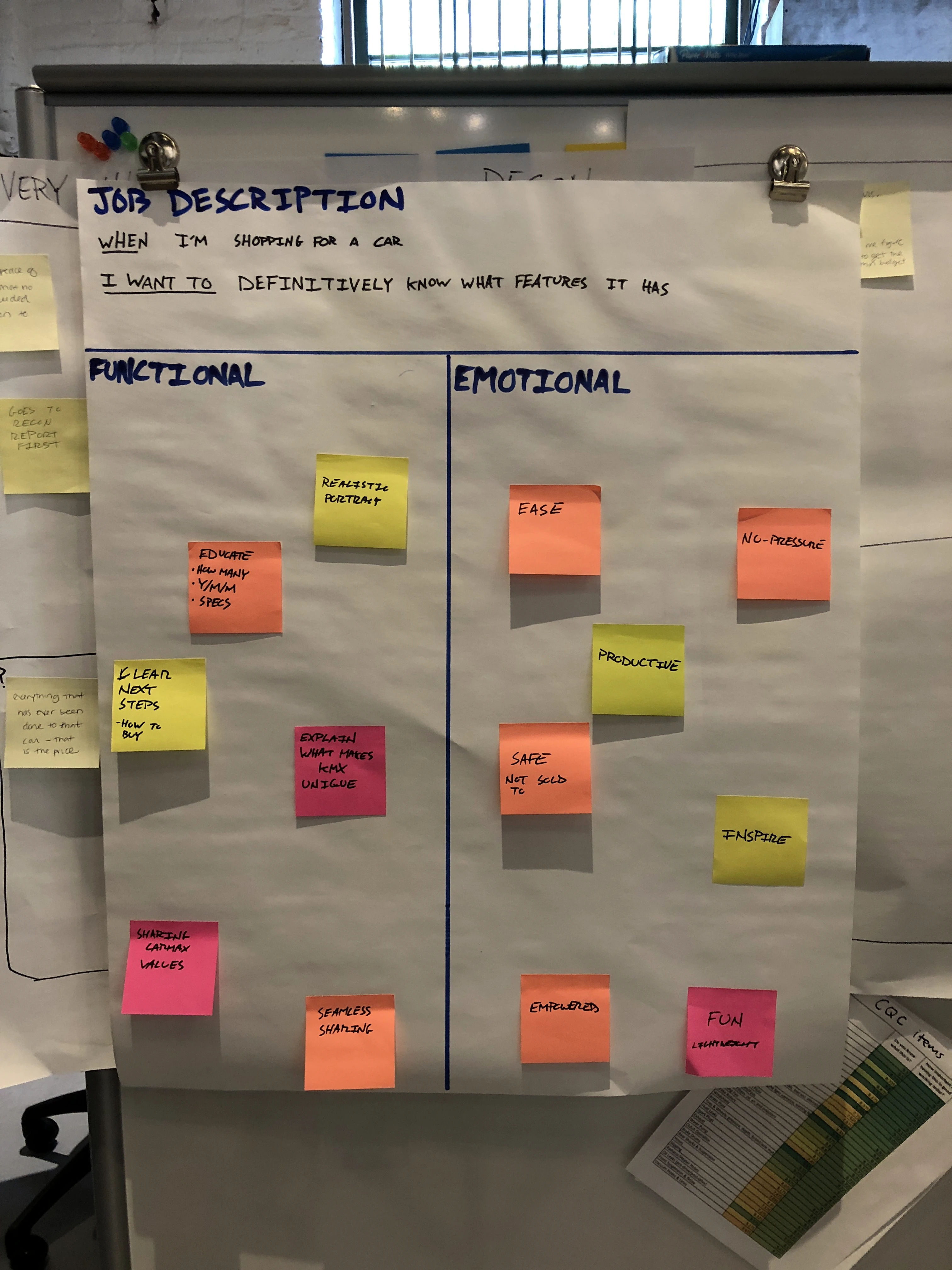
To make the research reusable, I built a one-sheet JTBD Canvas: the job stated at the top, then two columns — the functional outcomes the solution had to deliver ("show the feature, don't tell it"; "easy findability") and the emotional ones (feel "confident," "assured"). We filled it from interviews and kept it living, debriefing against it after every session. It turned scattered findings into a shared, defensible point of view the whole team could design against.
the canvas — "when I'm shopping for a car, I want to definitively know what features it has," split into functional and emotional needs
show, don't tell
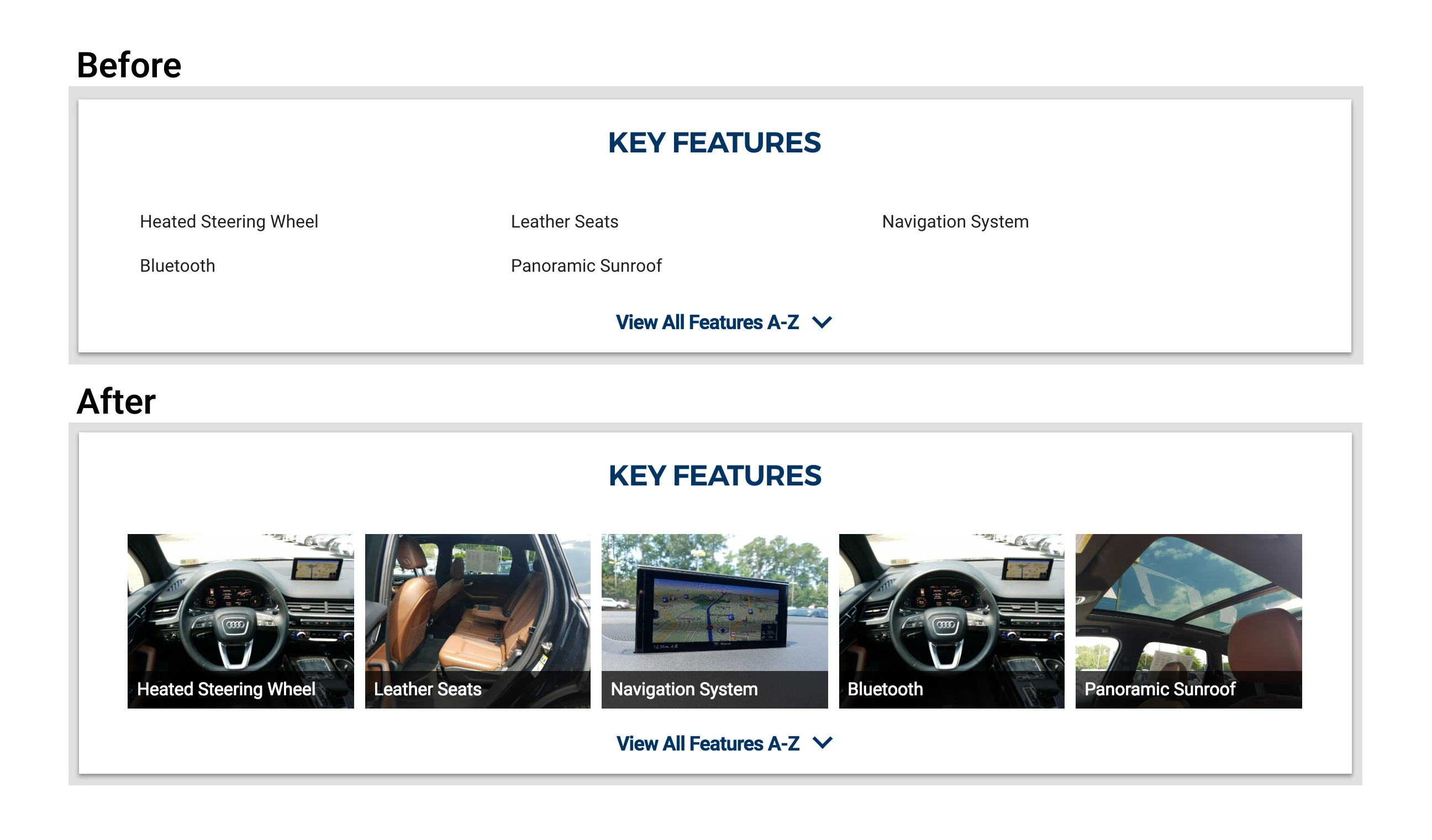
The first shipped change was small and pointed. Instead of a text list of features on the car page, we showed a row of thumbnail photos of what each feature actually looked like — so shoppers no longer had to hunt through the gallery to confirm a feature existed. We split traffic in an A/B test against the old list; showing the features as pictures dramatically increased conversion to submitting a lead.
before / after — swapping the text list for photos of each feature lifted lead conversion
a 360° view for a bigger job
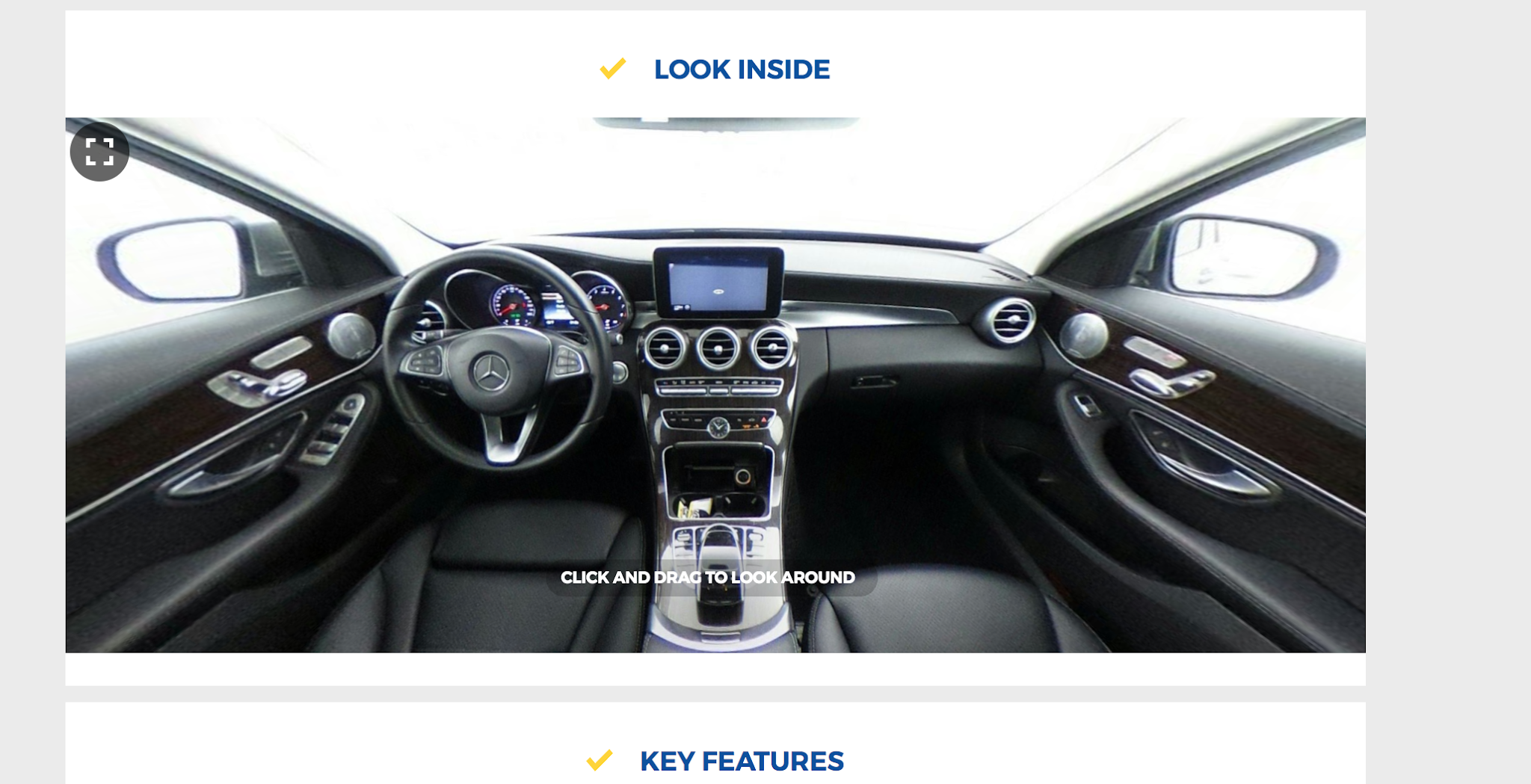
The next job surfaced the same way: interior shots of the front and back seats were among the most-engaged photos on the page. Shoppers were using them to answer "how big is this car, really?" — better than specs or cubic feet ever could. So we designed for the job directly: a 360° interior photo you could drag to look around. To win resources for the first in-store pilot, I stitched customer reactions from a prototype into a highlight reel — internally known as the "360 freakout" — and used it to influence stakeholders. It tested so well the team rolled it out to every store.
the "360 freakout" reel — customer reactions I edited together to secure the first pilot
producing it at scale: CarMax Capture
Richer imagery created a new problem. As CarMax rolled out indoor photo studios across 150+ dealerships — and as 360° and feature photography demanded more shots per car — the studios became a bottleneck. My team was asked to find out why merchandising time was increasing. Combining pace-time metrics with direct observation, the evidence pointed at the off-the-shelf software running the carousel and camera: built for pro photographers at small scale, it was cumbersome, hard to train, and error-prone on the studio's machinery.
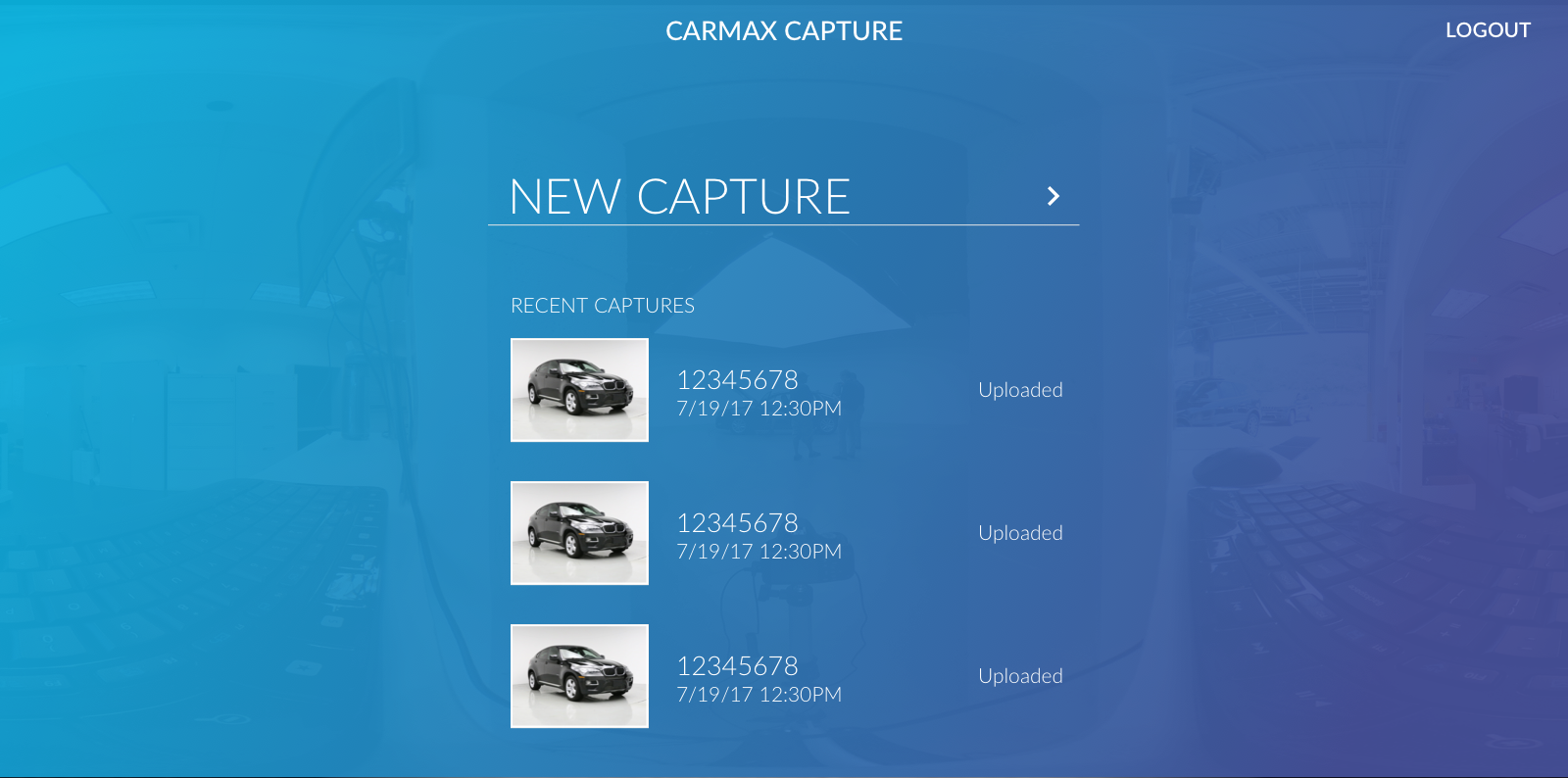
So we built our own. I pitched stakeholders on a small team — me, an engineer, and a PM — and a few weeks to put working software in a struggling store. The key move was getting out of the office and onto the floor: co-creating with the associates who'd actually use it. Cropping was their hardest task, so we trained a machine-learning crop model on CarMax's own inventory to recommend the crop automatically, with controls for final adjustments. That one change alone transformed task success and time.
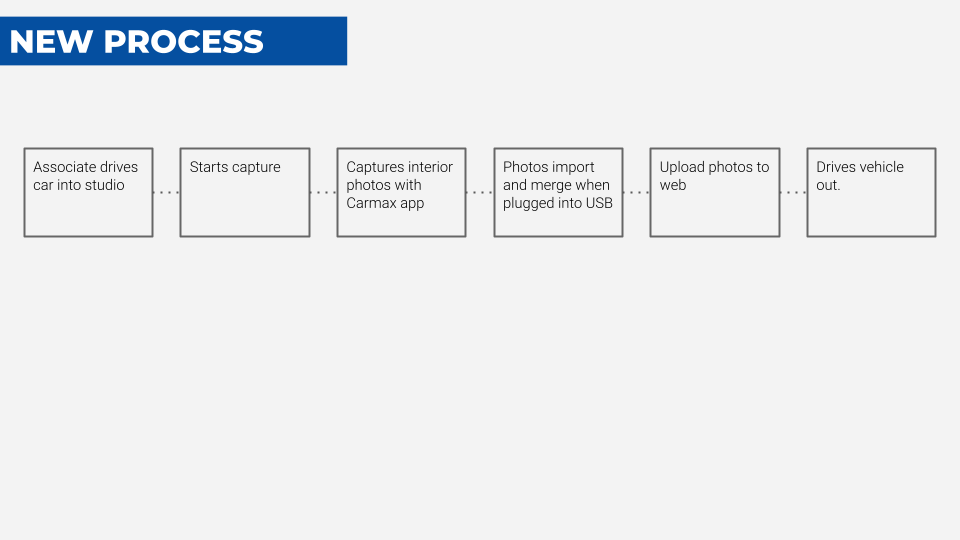
CarMax Capture — a custom studio app with an ML crop model that turns associates into pro photographersthe new studio process — drive in, capture, auto-merge over USB, upload, drive out
Involving associates from day one — paper prototypes tested mid-shift — took us from sketch to working software in a few sprints. After a successful pilot we handed it to operations to productionalize. Time-to-merchandise dropped sharply, profit per unit rose, and associates overwhelmingly preferred the new process. The work was patented, and the platform kept paying off: interactive hotspots and immersive experiences became possible only because we'd reimagined how associates interact with the tool.
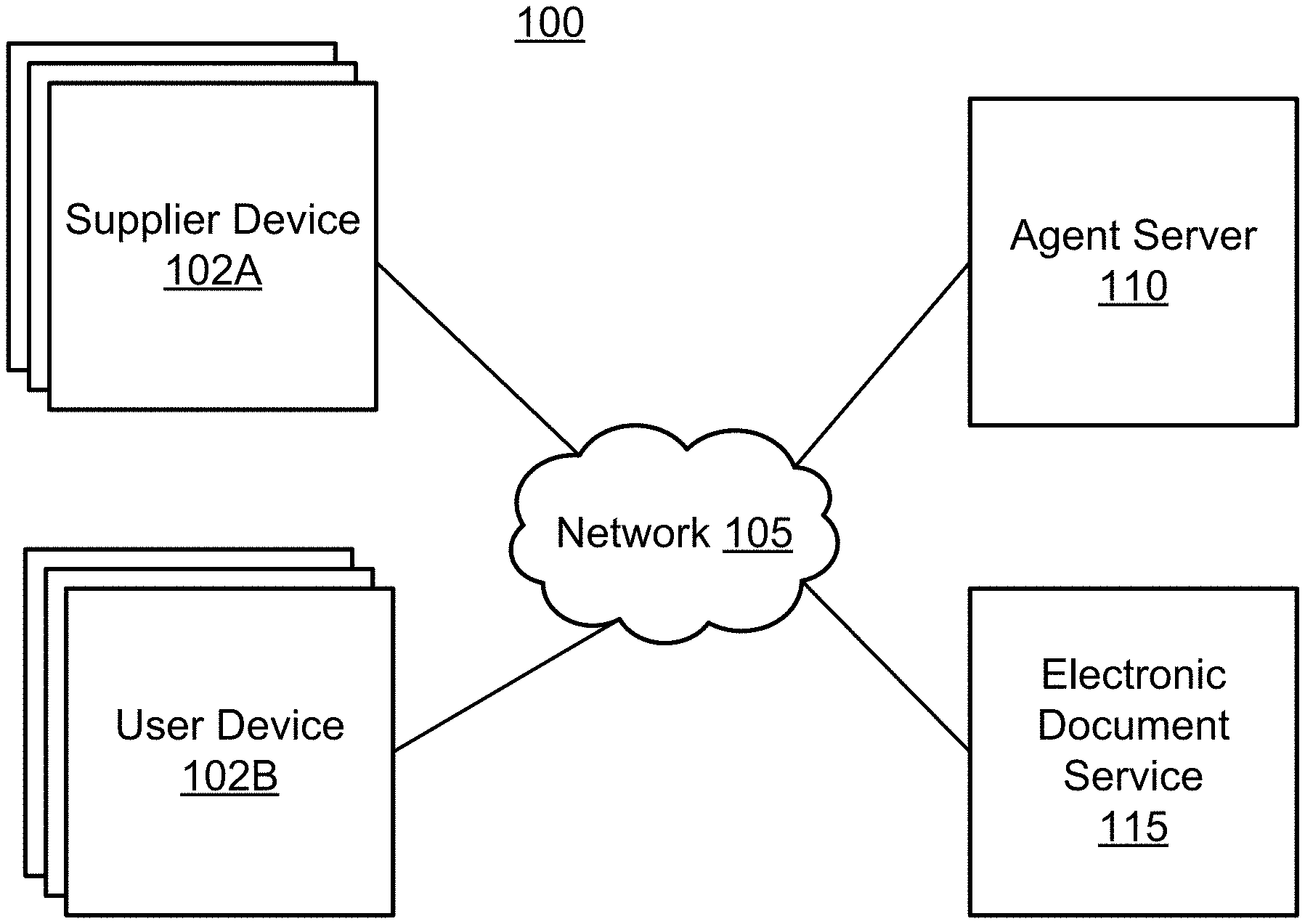
from the patent — US 2021/0349885
the through-line
The journey connected two things that are usually kept apart: what a shopper needs and how the organization produces it. Jobs to be Done moved the team off cosmetic tweaks and onto the real motivations behind shopper behavior; systems thinking then linked those jobs to the studio tooling that makes the imagery at scale. Same team, same operating principle — deep research into frameworks, frameworks into experiments, experiments into shipped experiences — end to end across CarMax's digital merchandising.